
19th February 2026 AI, critical minerals & the future of mining
AI is no longer a future concept in mining. It is rapidly becoming the operating system of how we discover, develop and responsibly extract critical minerals.
Jef Caers (Mineral-X, Stanford University) as a member of the Programme Committee of World Mining Congress 2026, will have the privilege to discuss how quickly AI is reshaping our industry not as a standalone tool, but as an integrated decision-making ecosystem.
To understand the shift, consider the world’s most sophisticated AI deployment today: the autonomous vehicle. A self-driving car is not one algorithm. It is a system, sensors, models, probabilistic reasoning, continuous feedback loops, operating under uncertainty. Mining is moving in exactly this direction.
From intuition alone to intelligence amplified
AI-assisted exploration is already transforming how we search for critical minerals.
But as Jef Caers states, AI does not replace the geologist. AI excels at evaluating thousands of geological scenarios, integrating geophysical, geochemical, remote sensing and drilling datasets within complex 3D subsurface models. It performs sequential decision-making, recommending what data to acquire next to reduce uncertainty around economically viable deposits. However, what it lacks is creativity, intuition and the experiential reasoning of an expert geoscientist.
AI as a strategic compass
Sustainable mineral supply requires more than orebody discovery. It demands: policy alignment, ESG integration, supply chain transparency, geopolitical risk awareness, long-term economic modelling
AI can evaluate these multidimensional interactions simultaneously, something humans struggle to do consistently across time horizons and competing objectives.
When decisions become sequential, uncertain and multi-criteria, AI-supported systems demonstrably outperform isolated human judgement. This capability is not theoretical. It is emerging now.
Operational resilience through 3D intelligence
Every orebody is heterogeneous. Spatial variability in grade, hardness, mineralogy and metallurgical response determines project performance. AI can integrate these three-dimensional variations directly into operational planning: mine scheduling, blending optimization, throughput management, energy efficiency. The result? Fewer costly surprises. More predictable outcomes. Greater resilience.
Operational tesilience through 3D intelligence
Mineral processing is ripe for AI-enabled transformation. By jointly optimising grinding, flotation, leaching and extraction, rather than treating them as isolated steps, AI unlocks new efficiency pathways.
Even more critically, AI enables smarter reprocessing of tailings. By recommending what data to acquire and modelling economic potential under environmental constraints, AI can help recover critical minerals from historical waste while reducing ecological impact. This is where technology meets responsibility.
World Mining Congress 2026
As part of WMC 2026, Jef Caers recently explored these themes during his webinar. The next opportunity to continue the conversation in person will be at WMC 2026, Peru 24-26.06.26
Image source: WMC 2026 official webpage
World Mining Congress
2026The 27th World Mining Congress will be organized in 2026 in Peru. Detailed information can be found either on the 27th WMC official webpage or the third circular.
IOC / WMC Meeting
2025The 106th IOC/WMC meeting will be organized on September 18th 2025 in Jakarta, Indonesia.
Our news Others news
2nd April 2026 Easter wishes

Dear World Mining Congress International Organizing Committee Members and all Mining Industry Representatives, As we approach…
1st April 2026 Riverside moves into Phase 2 at the Union Project
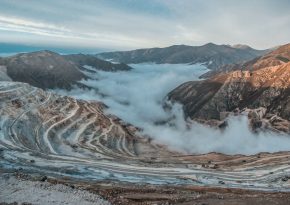
Riverside Resources Inc. has entered a new phase of exploration at its Union Project in Sonora,…
27th March 2026 Leadership, Technology and Transformation at World Mining Congress 2026
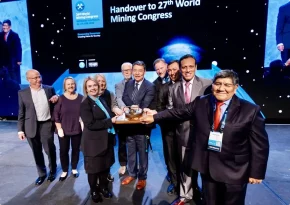
At a defining moment for the global mining industry, the 27th World Mining Congress (WMC 2026)…
26th March 2026 Advancing resource confidence and restart strategy at Minto Min

Selkirk Copper Mines Inc. has annunced that it is nearing completion of its 50,000 m Phase…
24th March 2026 Global mining Leaders to gather at World Mining Congress 2026
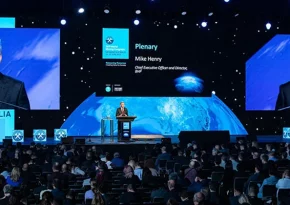
This is far more than a traditional conference. It is a high-level platform where strategic decisions…
19th March 2026 Resolution copper advances
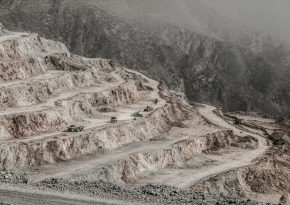
In a major step for the future of domestic resource independence, the Resolution Copper project in…
18th March 2026 Restart of the Sangdong Tunsgten mine
After more than three decades of inactivity, the historic Sangdong Tungsten Mine in South Korea has…
17th March 2026 Copper exploration accelerates in Nevada as Giant Mining launches 2026 program at Majuba Hill

Copper exploration activity in the United States continues to gain momentum as demand for critical minerals…
10th March 2026 CTR’s $4.7B deal signals a new model for U.S. energy and critical minerals

The race for secure energy and domestic critical minerals is accelerating and a new transaction in…
6th March 2026 PDAC 2026 Global mining community gathers to shape the future of mineral exploration
The global mineral exploration and mining community gathered this week in Toronto for PDAC 2026, continuing…