
31st October 2022 Mongolia Mining Industry
Mongolia’s mining sector
The first state mining industry in Mongolia was established 100 years ago, on December 25, 1922, with the establishment of the Nalaikh Coal Mine Deposit located 40 km from the city of Ulaanbaatar. Therefore, in December 2022, Mongolia’s mining sector will celebrate its 100th anniversary.
Today, Mongolia’s mining sector accounts for 90% of the country’s exports and 30% of its budget revenue, and more than 60,000 people work in the sector.
Cooper mines
Considering the total production, 2 copper mines with processing plants, Erdenet Mining Corporation SOE and Oyu Tolgoi LLC produce more than 1 million tons of copper concentrate per year. Total prepared copper reserves are about 30 million tons.
Coal industry
The coal industry produces about 40 million tons of coal, and exports more than 30 million tons for metallurgical purposes. 90% of coal exports are supplied by 4 large mines with an annual capacity of up to 10 million tons, and these mines are located in the southern regions near the southern border of Mongolia. Estimated coal reserves are 37.2 billion tons.
Iron, gold and other deposits
Moreover, 5-8 million tons of iron ore are extracted and exported from the main iron mines which are located in the northern regions. Total reserves of iron ore are 1.2 billion tons.
Mongolia ranks first 4th in the world in terms of fluorspar mining, and an average of 400-500 thousand tons of ore is mined and exported annually. The fluorspar reserves are 48.3 million tons.
Also, Mongolia’s mining industry produces 20-22 tons of gold per year and has 2,500 tons of gold reserves.
Modern geotechnological methods have been widely introduced in the mining industry since 2000. Today, 15,000 tons of cathode copper is produced annually from copper oxide ore using SX-EW technology by two producers and additionally, three new projects are in development at Erdenet Mining Corporation SOE and at Tsagaan Suvarga deposit.
There are also 2 factories for extracting gold from heaped ore, Bayan-Airag and Steppegold, and a factory with such technology has been developed at the Gachuurt deposit with 80 tons of reserves. The geotechnological further direction is to develop uranium mining at the French-invested company „Badrach-Energy” and at the Czech-invested „Gurvansaikhan” LLC. Together, these companies have designed a plant capable of producing up to 3,000 tons of uranium oxide. Total proven uranium reserves are 197,000 tons.
There are 2 companies working in the field of oil and they are producing about 1 million tons of crude oil. Oil reserves are estimated at 330 million tons.
Furthermore, about 3 million tons of sand, gravel, clay, and limestone are mined for the production of building materials.
Future trend
The future trend of Mongolia’s mining industry is moving from extraction to processing industry, and a development concept has been developed to maintain the production of final products in the next 20 years. The goal is to intensify the development of copper smelters, oil refineries, and ferrous metallurgy.
World Mining Congress
2028The 28th World Mining Congress will be organized in China. Detailed information will be provided in future.
IOC / WMC Meeting
2027The 108th IOC/WMC meeting will be organized in Kosice, Slovakia.
Our news Others news
21st October 2026 Neo performance materials selected for €126 million EU grant to expand Europe’s rare earth magnet supply chain

Neo Performance Materials has made a press release that its Project GAUSS, an integrated rare earth…
13th October 2026 KGHM secures EU strategic status for two copper projects

Europe’s efforts to secure critical raw materials have reached another milestone. The European Commission has granted…
6th October 2026 KGHM and South32 launch $725 million Sierra Gorda expansion to lift copper production by 20%
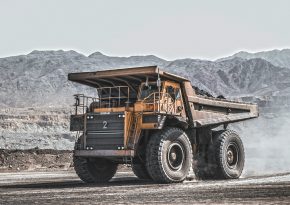
KGHM Polska Miedź and South32 have made a press release informing that they formally launched a…
30th September 2026 CoTec and Copper Intelligence target a new copper resource

Decades of copper mining have left the Democratic Republic of Congo with vast volumes of historical…
22nd September 2026 First Quantum patents quantum electra-haul, advancing mine haulage electrification
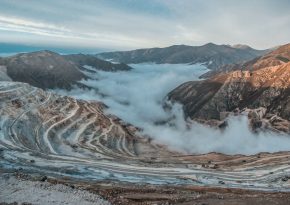
Mine electrification is moving from pilot projects toward industrial-scale deployment, and First Quantum Minerals has reached…
15th September 2026 Rio Tinto and Nyangumarta People peach milestone agreement for Winu copper-gold project
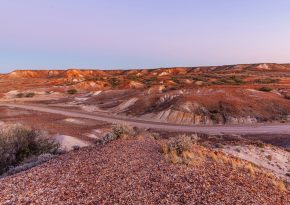
Rio Tinto and the Nyangumarta Warrarn Aboriginal Corporation have signed a landmark Project Agreement for the…
11th September 2026 Forge resources completes La Estrella underground ramp

Forge Resources Corp. has informed that the Company has reached an important underground development milestone at…
7th September 2026 Greenland Mines completes Sarfartoq acquisition, strengthening western NdPr supply potential

Greenland Mines Ltd. has completed the acquisition of the Sarfartoq Nd-Pr Rare Earths Project in southwest…
1st September 2026 China’s reported 30 million tonne uranium discovery could reshape the global nuclear supply chain
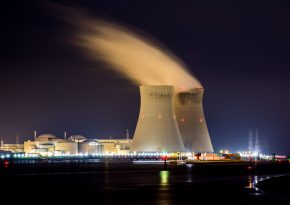
A reported uranium discovery beneath China’s Ordos Desert in Inner Mongolia is drawing attention far beyond…
26th August 2026 Taco Lubbock secures ASME and National Board Certifications

For industrial manufacturers, certification is more than a compliance milestone. It is a measure of whether…